
- RSS loading...
On AI Surveillance
A topic of discussion that bears re-thinking about privacy and bias with respect to combating misbehavior, 'nuisance streamers' and crime.
This post was written in collaboration with tech-based blog section Desk Stem.
We are all being watched. This website is being tracked as they got hold of this blog post, and if it gets a pass by their search engine standards, knowing it doesn't cover nor discuss anything controversial nor explicit, they will index this page for those searching. Even though getting rid of social media is one of the biggest suggestions someone can consider for their own mental health, on the other hand, it's a tactic that wouldn't matter as much since the platform has gotten hold of our information, the stuff we've posted, content we've shared and so on. Deleting means it's completely gone and cannot be searched nor accessed...but has it truly been deleted or have they all been secretly backed up? Keeping records of all our information as well as our activities both online and offline, our locations being tracked, tracking our purchases, places we visit, events we attend and more: You can thank the Patriot Act for having this happen in light of what happened on September 11, 2001 (not particularly the main reason, but it "set the stage" so to speak).
"Track me, I'm not doing anything."
Larry Ellison, the co-founder of Oracle, shared the idea of automating surveillance back in September 16, 2024—brought up in their financial analyst annual meeting. He said the following:
"Every police officer is going to be supervised at all times. If there's a problem AI will report the problem to the appropriate person1.
Citizens will be on their best behavior because we're constantly recording and reporting1.
There are so many opportunities to exploit AI1."
— Larry Ellison, co-founder of Oracle
As someone who hangs around YouTube on a frequent basis, I'm surprised that my favorite channels specializing in social commentary hasn't said nor reacted about this. Speaking of AI, one of the industries trying to push back against it is the entertainment industry, as producers have been already experimenting with automating their film projects—saving them thousands and millions of dollars. While some have a practical use for AI, it's still met with mixed reactions though in due time, much in the same way as the dot-com crash, it'll settle and the populace will adapt (we'll see moving forward, given that such LLMs require plenty of electricity to run). Alright, so since you can have AI automate your online searches, artwork, language transalations and captioning/transcribing along with providing a prompt health diagnosis, how about automating surveillance? Let's talk about it.
A hot cup of coffee may not be enough
When automated public transits and robot-like machines were making its way into our lives, many people say that it's easy to dismantle if they act "unconsciously," and that is to pour a hot cup of coffee on them. Will the same tactic work with automated surveillance cameras? What if they're liquid-proof? Worse, will punishment be in place for vandalizing security equipment in the same way someone gets fined for tampering with fire extinguishers? Concealing our identities or wearing a mask may not be enough either. Besides, having done transactions online, from sending an image of your driver's license to depositing checks, I highly doubt we can run and hide now.
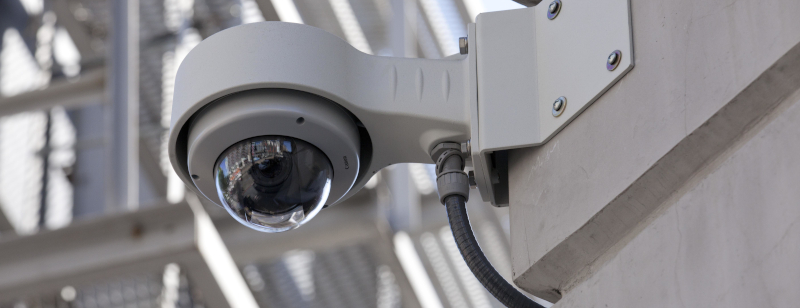
To automate surveillance means an immediate drop in crime which would trigger positive responses from the public. Many would-be criminals, and possibly "nuisance streamers," would be thinking twice about their operation(s) once automated surveillance are deployed. However, because of drop in crime means less work for the police force. What they plan on doing during their down time remains to be seen. Anyway, to be recorded 24/7 in accordance to "be on our best behavior" seems to be a stretch. It's basically turning our nation's society into somewhat of a strict classroom: If you have a problem, raise your hand(s), otherwise no talking, and if so, face the consequences. Okay maybe not, but it seems to be headed that way. The one problem I can think of is we wouldn't have any "wiggle room" to let loose so to speak. In other words, people have their own ways of coping, reacting and conversing with others. Constantly watching and assuming that someone needs to be on watch because of how they acted/reacted is pushing the boundaries on one's autonomy. Just because someone is laughing, screaming and/or jumping for joy doesn't mean they're looking for trouble. Other than that, it's wrong to assume that at any point in time, someone will misbehave. Besides, if someone is having an argument with another person in public, is there a reason why we should care? People's problems are their own and should be minded as such so long as it doesn't turn violent, but does this mean everyone has to be on their "best behavior?" That's a lot to ask for.
One of the questions I wish I could ask Larry Ellison are the following: What's an example of "best behavior?" Can we prove humans are good? And lastly, would an advancement in surveillance guarantee lower crime? Growing up, I remember watching documentaries about casino cheaters which featured interviews with those working in casino surveillance. Their "eye in the sky" has improved so much over the years, yet that still didn't stop gamblers and patrons from trying to cheat and steal from the casino and/or the customers. For that, even if this idea worked, it likely won't make a difference when compared to the surveillance system in casinos.
Another problem with automated surveillance is bias. Once the camera tracks a "certain type" of person, that individual will unknowingly be on strict watch. With all that has gone on since 2020, this technological bias will not sit well with the public. Even apologizing then announcing that the tech company will fix the problem to mitigate such thing from happening again, it'll be too late as that poor individual will have been imprisoned, wrongfully punished or even "unalive'd." Whatever the case, Oracle will have plenty of ground to fill making sure that such thing will work in both theirs and the citizens' favor (again, assuming that this breakthrough will be approved for deployment). Other than that, I doubt many people will hold their breaths as we may see some backlash...if people care.
"I'm not scared, Kris. I can always ██████████. We're a ███ country!"
Sure, our smart devices are, by default, tracking us. Taking a selfie with your smartphone has facial recognition integrated to which your face is also being tracked and recorded, not done for the camera to auto focus. On the other hand, if you think about it, we are our own surveillance system. How many times have you witnessed a commotion, or public meltdown(s), then secretly pulled your smartphones out to record what's happening? What about that illustration that circulated online featuring a group of people standing around with their smartphone recording someone drowning and yelling for help? And how many times have you recorded an employee with your smartphone over bad customer service? The door swings both ways on this issue, but the point I'm trying to make is that regardless, our so-called routine antics have turned us into "surveillance at the ready." The only difference with Ellison's suggestion is automating it without us doing so. Okay, but again, won't that convolute things? Granted, there exists some creepy person always recording their surroundings, and some livestream their attendance to places—all being tracked secretly from their device(s). I say secretly because in case some drama occurs, and is caught by these smart devices, it should be very easy for video forensics to "unpack" the video clip deciphering the alleged criminal(s) caught on video. These videos caught on smart devices have made things easier for authorities to track and catch criminal(s).
Some of you likely remembered when the National Security Agency, NSA, deployed a system to scan and track certain keywords online that may constitute to terrorism2. While the internet laid down an operation to "troll the NSA," especially with users on social media getting random flaggings for their posts alledging it violates community standards, spreads misinformation and so forth, we have reached the point where we either have to come up with alternative words and are now self-censoring. Saying things with respect to self-censor so as not to upset the person's sponsors is a cop out to the reduction of this "wiggle room" in being able to say and express ourselves accordingly. Whether the public knew about this or not, self-censoring is commonplace, much like how I just used the word "unalive" earlier in this post.
With automating surveillance, especially on the internet, it'll twist and change our way of communicating yet again. Carrying this alleged bias that may come along with it, many of us will not only continue to self-censor, but we may not be allowed to have such specific conversation(s) at all! Again, this begs the question: What does it mean to be on our "best behavior?" We certainly wouldn't want to end up as a society that says and does nothing because if we do something, we may get in trouble. I don't know, but I have a feeling such thing has been portrayed in TV shows, movies and books. Things are moving very fast, and witnessing something like trashing theaters during a movie to 'nuisance streamers' flying to other countries bothering locals just for viewership and donations, it wouldn't surprise me if immediate deployment of such surveillance will be in place; I feel it will be tested in certain cities and areas before it becomes fully in tact.
We will wait and see, but I'm certain many people will not like this even if it means "zapping" out crime promptly. However, being that this technology requires being recorded all day every day, I will quote what Bob Tuschman said during the second season of Food Network Star back in 2006 while judging a contestant:
"Here's something you should know: The camera eats up energy."
— Bob Tuschman, former president of Food Network, as judge on Food Network Star (2006), saying this statement to contestant Andy
"♩ I always feel like, somebody's watching me. And I have no privacy! ♪"
Keep those song lyrics in mind when tuning to the radio, browsing YouTube, logging into Spotify or any music platform; They may just play or recommend it as a hint. (Those are lyrics from the song "Somebody's Watching Me" by Rockwell.)
I'm Kris and this has been Food For The Saints.
SOURCES:
1. The Register: "Ellison declares Oracle all-in on AI mass surveillance, says it'll keep everyone in line" (2024) by Brandon Vigliarolo - https://www.theregister.com/2024/09/16/oracle_ai_mass_surveillance_cloud/
2. Business Insider: "These Are Supposedly The Words That Make The NSA Think You're A Terrorist" (2013) by Dylan Love - https://www.businessinsider.com/nsa-prism-keywords-for-domestic-spying-2013-6
(UPDATE 08-21-2026 @ 7:35pm: Added a paragraph tag, fixing the written structure.)
Blog post rating: |
|---|

Comments
Add Comment
This policy contains information about your privacy. By posting, you are declaring that you understand this policy:
- Your name, rating, website address, town, country, state and comment will be publicly displayed if entered.
- Aside from the data entered into these form fields, other stored data about your comment will include:
- Your IP address (not displayed)
- The time/date of your submission (displayed)
- Your email address will not be shared. It is collected for only two reasons:
- Administrative purposes, should a need to contact you arise.
- To inform you of new comments, should you subscribe to receive notifications.
- A cookie may be set on your computer. This is used to remember your inputs. It will expire by itself.
This policy is subject to change at any time and without notice.
These terms and conditions contain rules about posting comments. By submitting a comment, you are declaring that you agree with these rules:
- Although the administrator will attempt to moderate comments, it is impossible for every comment to have been moderated at any given time.
- You acknowledge that all comments express the views and opinions of the original author and not those of the administrator.
- You agree not to post any material which is knowingly false, obscene, hateful, threatening, harassing or invasive of a person's privacy.
- The administrator has the right to edit, move or remove any comment for any reason and without notice.
Failure to comply with these rules may result in being banned from submitting further comments.
These terms and conditions are subject to change at any time and without notice.






Comments