
- RSS loading...
On Collecting
While the hobby trigger tendencies of hoarding, they are not similar. Also includes takes on Sony's all-digital plans and companies snagging books for AI ingestion.

Everyone needs a hobby. People need activities, outside of work/school, that keep them out of trouble; while others continually complain about things they can't control on social media—nonstop projecting and wailing. One of the hobbies prevalent today, albeit nothing new, is collecting: from antiques to video games, acculumating items worth someone's investment, aesthetic, or sentimental value; bringing satisfaction, [mental] security, and comfort. While it's a hobby often conflated, yet misconstrued as "hoarding," there's plenty to discuss behind collecting. Something about it feels good, owning a line of items.
There isn't a universal reason why people collect, given collectors' answer(s) are different. Nostalgia is often the reason to pursue this hobby; reflective of something that started by happenstance or from someone in their family/relative/friend circle; for some items, it represents their whole lives. Then, there are a subset of those who collect for investment purposes: cashing on products whose value, in their hopes, will increase overtime. Regardless, collecting serves a sound purpose for those partaking in owning such line of items. Given that nostalgia is the popular reason, it's generates a feeling one cannot explain in words.
The "Feels"
Collecting gives people a sense of security: like leaving your TV on all night, giving off the vibe you're not alone in your house. Because everyone has their own stories growing up, some have had it rough: at home, in school, etc., where they've not been treated well—taken for granted, undeserving of love, care, attention, bullied, and/or a target for narcissistic blame. Besides food, inanimate products make a great choice for ease of comfort; given these items don't judge, talk back, and are always there when needed. These objects, likely stemmed from childhood, being offered toys to remain emotionally stable, serve as an escape not often sought in the real world. It may or may not come off in such way, depending on the person, but seems as though. Whatever occurred in their homes, schools, and/or place of work, added with the stresses and struggles alongside, has done its part—damages notwithstanding. Many of us never grew up hearing the quote, "you can't choose where you started, but you can choose where you end up." The willingness to "cope" by attaining lines of items bears no shame for the person themselves nor among others; though not every collector is vehemently depressed or lonely. As mentioned earlier, such items do not, and never will, shame the one that purchased them—akin to adopting a pet (animals, in comparison, are obviously sentient). This sense of comfort is usually unexplainable, but it's a dopamine strike in one's psyche. Feelings of remaining occupied become inclined for the individual with these items, having something they look forward to. Others perceive this as "unrealistic," occupying space, gathering dust, and/or throwing away money: misunderstanding these individuals who collect. If presumptuous people like them don't understand why fidget toys are made for, or collected by, those with autism, then they'll never recognize, nor respect, a person's reason to collect—books, action figures, stuffed animals, and more. Once again, it's another proof some people are resorting to projection against innocents, like collectors, living profusely in reluctance to confront the fears in their own lives.
You collect for yourself, and words render inadequate to others when explaining why because you're the only one who knows your own mind/self. Often times, you'd prefer not having others know about your mind/self as it's an open invitation for possible mockery over who you are, and that's okay; because people dislike things they don't understand. Therefore, it's okay keeping such reason(s), and your collection, to yourselves. They, themselves, can't cope with their miserable lives at all. What looks like a bad consumerist habit has turned into something positive—one that's enjoyed by you, and not them. (Seriously, I wish insecurity was considered a crime. This planet, galaxy, and universe will be much less stressful were that be the case. Think about it: if insecure, manipulative people cannot comprehend, let alone fix, what's missing in their lives, belligerently picking on innocent folks, like collectors, why do they eventually default to violence?)
There's nothing more comforting than coming home to something. Seeing your action figures, physical media stacks, or books, after a tiring day from work/school, is something many cannot express the feeling of. Another reason for collecting is the harsh conjectures of reality. We know how stressful cable news, current events, (geo)politics, or online content can be: some unable to craft an opinion, nor can comprehend ideas resolving on-going issue(s); while others humbly accept situations beyond control, focusing only on their own matters. Not everyone can think of solutions for issues reported daily, but acceptance that a person's life path is focused on balance than things they can't answer to shall be considered. In other words, let people be: it's possible to live properously without being bogged down over events that bring nothing but stress.
Collecting helps preserve one's peace and security. There's a cadence synonymous with the tranquil nature of items that exudes mental stability (think healing stones). Your collection is a library for contentment: you can always access them at any time. In ties with nostalgia, such items serve as a "time machine" reverting back to an individual's moment(s) never fulfilled nor enjoyed. Everyone is different, as some people's lives started sooner than later; yet there are others wanting something particular but never got it. Heading into adulthood, with earned income, collecting eases those lost days/moments/years. This hobby has given them a chance to preserve that moment, or part, of their childhood/adolescence they never were able to experience. Some will argue, "why go back to the past?" Appropriate question, as the only way is forward. Personal self-reflection, involving learning one's own past, yields plenty of benefits. Fulfilling someone's missing past gives them better security moving forward: to actualize that moment in their adult life with the puzzle piece(s) they've wanted/needed this whole time, without causing a ruckus about it. It bares no different than missing someone you love. For some, these missing pieces come around; others considered acceptance and move on; the rest struggle over that "completion" in their lives. This feeling is common among parents/guardians: hoping their child(ren) fulfill a goal they weren't able to do and more. Collectors often keep such item(s) to ground that fulfillment, even if they decide in selling it at a later time.
This isn't to say collecting has permanent ties with issues involving self-esteem. Some pursue collecting for the fun of it: building a library, or retail-like, setting that emit such cozy feelings in their home. Bringing and building that retail environment is also in conjunction with nostalgia. Others collect because of the item's beauty: products like art or jewelry being self-evident of that.
It is unfortunate this hobby has become an excuse for wreckless consumption among citizens. Few people online have confessed about spending every penny they've got to acculumate a large enough collection; not having any survival sense for necessities, like food and water. You and your health are more important: ensure in having basic necessities, as there's no reason attaining something too vast for your own keepsake. That's a notion plenty are struggling over when partaking in this hobby: especially comparing their own stacks against others, thanks to social media.
"My collection is better than yours!"
Overconsumption, misconstrued as "collecting," are by those who are envious of what others collected over the years. It ruined the purpose of what collecting is: nostalgia, artistic/artist appreciation, childhood fulfillment/completion, prolonging a memorable moment, and preservation. When you witness someone, online namely, spending thousands of dollars acquiring quantities of products within a short period, compared to those who spent years obtaining their preferred items, it reeks of compulsive spending: impressing, or competing, against others for "best quantity." There's something strange over someone spending so much money on bulk items that otherwise would get no use, but for content creation, viewership, 'likes,' and comments—a want to be above everyone else. Those guilty of doing this will immediately deny it, using some childhood sob story as copout to secure their actions; but that's what I see. It's the use of this hobby in attaining social noteriety: something that can't be bought with; while collectors do it for their own reasons, not caring about clout chasing. (These fake collectors are still active online.)
Continually, these citizens partake in this hobby to impress people they, otherwise, will never connect with. These kinds of people want attention on them—if you can do it, I can do it better than you mentality, which is behavioral envy. When items like Labubus made their way in stores, videos on social media platforms have shown those who presented their purchase for complimentary reasons; while others spent wrecklessly not caring how much they've bought, so long as they have plenty. It's like giving themselves Christmas presents while posting about it online: a tactic that can lead viewers to do the same. Nowadays, young kids, or Gen Alpha, have been reenacting these same habits as adults do online. Can we blame them for imitating what we do on the internet? (Responsible internet use for kids is a full topic itself.) In summary, what these people are really saying, deep down, is, "Guys! Look what I bought! I've got more than how much you have!"
It is people like these who have ruined collecting—as "hoarding." In specific circumstances, it does come off that way, though it's like saying eating food is a "fluke" for weight gain: it's not always the case, with respect to nuance, but responsible consumption is key. Better yet, it's best I clarify the meanings between the two.
Collecting vs. Hoarding
It's easy to dismiss a collector's consumption with hoarding. For me, the underlying action of hoarding comes off differently. A collector is someone attaining items in terms of entertainment, information, and/or preservation—something to enjoy for themselves. Someone who hoards veers toward this "robotic" complusion of things: if it's available, they'll get/buy and want more of it. Ever notice that one customer snagging all the utensils, condiments, and/or napkins at a fast food restaurant? How many times have we seen customers dine at buffets, scooping up every tray of food without leaving some for the rest? I see that as hoarding: "stocking up" on something, whilst not leaving any for others. As you know, not every item available is complimentary, with some costing money. When lockdowns of 2020-2021 happened, items like toilet paper and hand sanitizers were hoarded away from the public as a means for profit; same with entertainment items, like Sony's Playstation 5 consoles—scalpers as they're also called. Most of the time, hoarders want nothing to do with any meaning behind collecting. With power comes money, or "influence," given hoarders are able to call the shots having obtained a cornucopia of items. It gives off this, "if you want it, you have to get it from me...for a price 'bro.'"
Retail stores are not shy using the popular marketing phrase, "Hurry! These will not last! Get yours today!" Besides incessant greed, another reason why people hoard is having been brainwashed by such marketing. A third reason is likely growing up being shamed, or yelled at, for missing out on opportunities that were given/offered to them. Whether it happened in their homes or at school, the need to snag something stems from poor impulsive control; contrasted with ensuing such complusive action as a retaliatory gesture against the shame they received or lived with. In other circumstances, hoarders may have grown up from impoverished living standards; where their parent(s)/guardian(s) informed them of their limited finances, or barren surroundings, causing them to "do or die" for items ensuring it's attained in high quantities. In their minds, it's like, "There it is. Get it, more of it, then leave, or everyone else will take them." For purchased items, a hoarder's mind goes, "If I show up first, I can buy as much as I want;" or another way might be, "Once I touch these items, they're all mine." The false sense of earning a profit from their hoarded items, poor sense of controlled impulsion, plus ones living with that impoverished reality obtaining any means for survival, are my reasons why these people hoard—"FOMO," or "fear of missing out."
Hoarders, or scalpers, are one of the most frowned-upon people in modern society. Last I watched these hoarders, they snagged entire stocks of Pokémon cards at retail shops, like Costco and Target; and yes, there were times it got violent. Viewers have left comments in reaction saying, "Imagine how worse it'll be if there were a food shortage." That sounds like World War III 2.0, or World War III ½, to me. It's succumbing to that alleged "dopamine," purchasing something without enjoying what they bought. These people are "consumed" by their own consumptions; akin to that with complusive gambling. Sounds like numbness of the mind that sits between something unhealthy yet construed as harmless. It's the sudden rush giving that "high" feeling of goodness they get when their consumption succeeded: a sense of thrill exuded from adrenaline. This ties along with those having poor consumptive/impulsive control; including those who came from rough living standards. It's like something at stake they have to fight for—proving something, lest fighting off that irrational fear. Sadly for those hoarded items, not only do some get undersold, given away, or donated, but they're likely to get stolen...or destroyed. Let's say 'hello' to Betsy.
What Sony and Betsy Baker Have in Common
According to a book titled The Book of Heroic Failures by Stephen Pile, which, funny enough, was shared and quoted from my Linux terminal, via cowsay, Betsy Baker was a servant working at John Warburton's house (1682-1759). It just so happens that Warburton's Shakespeare collection was later found burned, with some used as bakery bottoms by Betsy, thinking they were a "hunk of junk." Ones that were saved are have been preserved and is available to view at the British Museum. It's stories like these that pop up every now and then, with someone's loved one, pet(s), or caretaker, destroying items that hold sentimental or monetary value. If we learned anything from this simple story, it's that not everything piled, gathered, and/or stacked are "organized trash." Then again, visitors of such household will never understand that; neither will Sony.
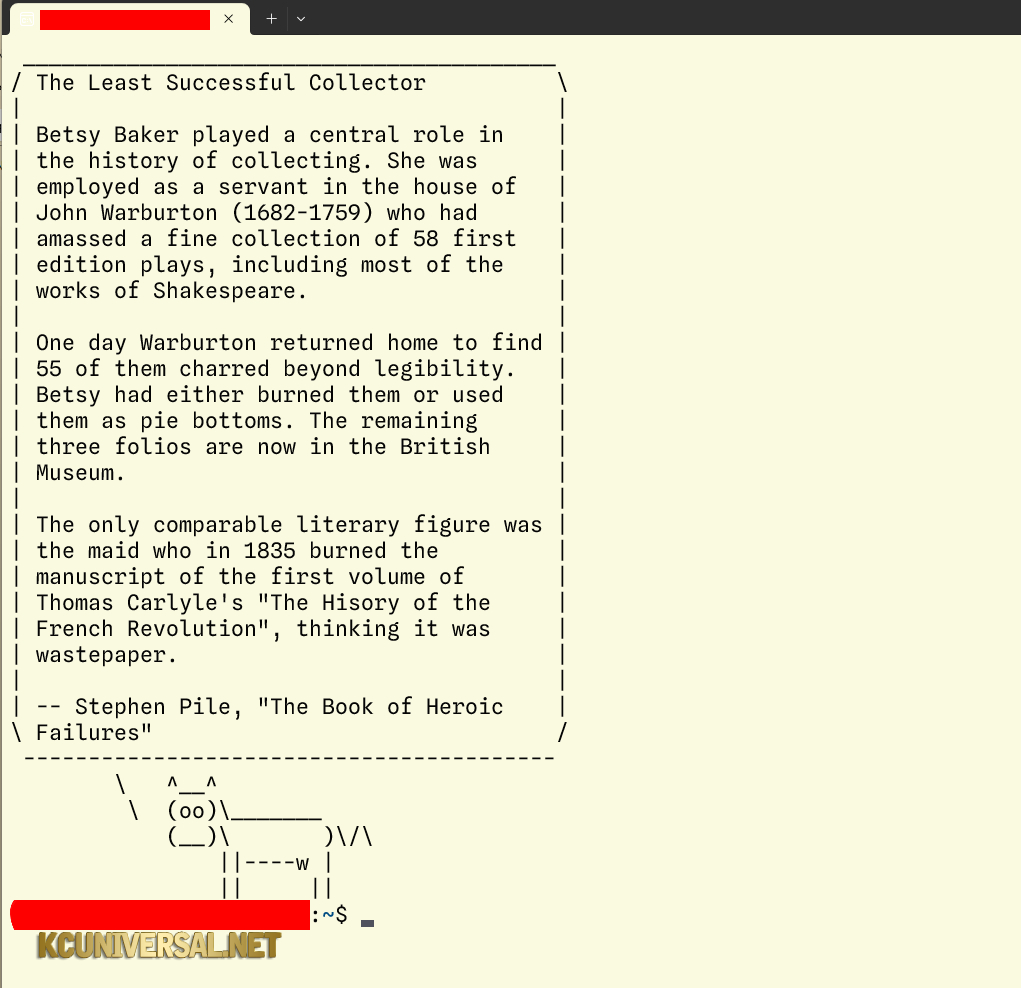
Sony aligns with Betsy Baker's sentiments exactly: getting rid of things that hold no purpose. I say this because Sony announced their plans to stop production of selling video games in physical form—Blu-ray discs. If physical materials render harmful, say to the environment, over the packaging of one video game, Sony should open a hydrology department: smart water usage not only with data centers, but their servers and data towers; plus launching an electricity department as well, for proof that computational machines use less natural resources in comparison. How much electricity is consumed when leaving servers running 24/7 for video gamers to access online any time of day or night? How many gallons of water does it take to cool servers and data towers in storage rooms when users livestream for their accounts/channels? "There's no such thing as free lunch," as the saying goes; and if there is no physical media to purchase, then notions about having and owning something becomes less of a commodity. There's no sentimental attachment/value that comes along with it even when given as gifts: a possible reason why birthdays, and Christmas seasons, aren't fun anymore. This is because items for purchase, gifting, or lending can all be accessed from "the cloud"—online—without much effort. However, a physical item bought, or acquired, emits that "I worked/fought hard to earn this," kind of deal. By that logic, physical items give off similarly as "badges of honor"—something that was worked/fought for. In contrast, say what you want about gun ownership, thus resorting to "digital warfare," Battlebots style; but destroying/confiscating ones a veteran used, protecting the country he fought for, disrespects his honor and life. Main reason you're able to go outside without fearing for your lives is because of those veterans. Have some gratitude for once. (A salute to each and every veteran out there protecting us! Thank you!) Heck, furthermore, isn't rewarding Nobel Prize winners, sports teams, top students, Olympians, etc., with physical medals, plaques, and trophies better than digital? Imagine how disgusted the faces of a baseball team got if they received their championship banners, trophies, and rings...digitally. Let's do another example: if you've earned thousands of dollars from your investments, but the currency is digital, are you still considered rich, sans physical money, or is it *just* a decimal number on your account? Like a math theorem, it's time to demand human, physical proof for secondary backup of what you manage digitally, knowing plenty of content, money, and information can easily be deleted, tampered, or blocked. In this case, a physical release is proof someone, or a production team, crafted the art you intend on purchasing/owning. As we head into 2027, it's getting harder to tell if someone crafted something themselves or if it's another "AI slop." For vloggers, is it really them on video, or did they automate themselves to have software read off their lines?
The fun and joy of creating art may render boring and not fun anymore. Why produce anything if it won't be owned nor archived? Sony's access-only will show and prove that today's content is disposable: a gesture of disrespect to artists of all kinds working tirelessly to survive ("'Earth' Without 'Art' is Eh," as folks online have expressed). In addition to "owning nothing," we should "be happy" about this? Has Sony consulted Google's Stadia department before making such announcement? Even if stopping production of physical media were for environmental reasons, natural resources will still be needed—water, electricity, etc. If an entity "buys" you lunch, by definition, it's still not free; something comes from somewhere, often with a price. I'm not a hydrologist—no complaints were I to be one, given my eternal love of mathematics—but water needed to produce games physically uses less than how much is required keeping servers and computers running for digital access. "I may be wrong, but I doubt it," as Charles Barkley famously said (credits to him).
Like a physical collection, the same can be said about owning digital items: having access at any time. However, because some things are steering toward a license for use and not owning what you bought/downloaded, companies, like Sony, want ownership of items they sell. The fact it's okay for them to own what they sell, but not their customers, is preposterous: like an angry, envious parent/guardian who can't, and won't, give pizza to their child(ren) unless they eat it all, with little left over for them. I never knew we'd be in an era when treating, transacting with, and/or talking to, customers like children is the norm (then again, look how people act, and what they post, on social media). I'm not sure if there exists a movie whose story portrays how corporate companies treat their customers like toddlers, and ways to fight back against it, but someone should write one. For that, in terms of digital content, we may be seeing days of P2P software—peer-to-peer—make a comeback again with respect to nostalgia: KaZaA, Morpheus, Limewire, WinMX, Grokster, eMule, Napster...anyone remember those?
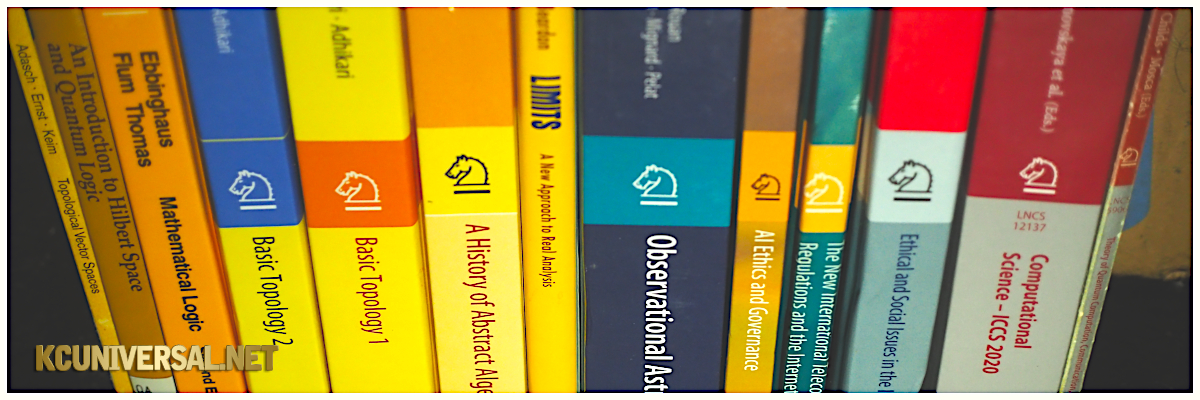
I'm a collector myself. Started with my parents back in the nineties, I've collected video games actively since 2009. I used to collect pachinko machines alongside, back in 2010-2012, having owned eight of them (all modern machines). Since then, life changed, reducing my library of 400+ to less than 100 video games; some saved from my sister and mine's childhoods. I've also sold off all my pachinko machines to another collector because of relocation. Currently, I've been collecting pairs of dice: originally gifted from my dad as a souvenir to me back in 2010 while we were on vacation. In honor of him, I occasionally shop for them: one of the main pieces that helped encourage me to pursue, and major in, Mathematics—having earned my undergraduate degree in 2025. In addition, when I was a kid, my parents would provide, and sometimes gift me, mechanical pencils too: another symbolic piece, pursuing writing as well. Nowadays, while handwriting with new, modern ones, I'd shop for mechanical pencils I grew up with; some being permanently stolen by former classmates in middle school. I was never a "completionist," thus only collecting items I use. I also don't buy items as display pieces, nor are they something whose price may increase the next ten years; for these things represent me, tied with sentimentality. Not everyone shares the same reason(s) as I, but alas, some don't need to express reasons why they collect (no one owes anyone an explanation anyway). I've always found fellow collectors as humble, wholesome people; these are folks not only with strong, knowledgeable interests in items they collect but have stories to tell. While corporations are looking to cut costs and automate tasks, while producing "slop" for customers, it's people like collectors that can entertain others with stories—of their own or about the items they have. If that were the case, then we're looking at a future like it's 18th century again: gathering around campfires, telling stories for entertainment. We can save our world...by telling stories!
Say "NO" to Book Burning
You've already heard reports about tech companies buying up physical books to train their AI models then destroying them in the process. It is this where collecting serves purposefully not just as a hobby, but preservation for public good and its history. For that, should we thank, perhaps apologize to, hoarders/scalpers in their unwilling contribution against multi-billion dollar companies snagging physical items for destruction? Hard to say, but I'd be the first in saying "yes" on this. If attaining items, physical or digital, are subject to destruction or metadata manipulation, then we're looking at collecting as a form of protest. Thus, collecting is a global "middle finger" against those thinking these items don't have any place in stores; likely citing overpopulation as the reason, despite declining birth rates. Books live longer than us humans do, so why would an LLM be any better given how much water is required to power them? I do believe AI has a place in terms of automating tasks that saves time and effort, but currently, it's not the "end all be all." I'm still okay reading books for entertainment and to learn something; I don't need AI for that, though some students stated in learning better with it. Due to AI's prompt speed in response, is this the underlying reason why attention spans have shortened? Let's recap: engage in hustle culture, shorten attention spans, destroy books, own nothing we buy—all while walking on eggshells, risk punishment for speaking out, plus getting blamed over today's weakening economy: no wonder why we're all stressed, anxious, and tired.
If preservation is under attack, then museums ought to take note. Being humans, we live with our biological imperfections with stride: one example being forgetfulness. A lot happens within finite periods that our brains aren't wired enough to remember every meticulous detail(s); with some forgetting what today's date is right now. This is what makes history important: showing available mediums, be it physical or digital, to share and conserve moments, events, and/or items representing a period in time. No doubt that these historic items will outlive us, but we need them as mantle pieces for proof of an era in which such generation experienced. Collecting for preservation, in this case, can be seen as public service: a form of conservation that science foundations themselves are unable to keep up with. Had fossils not been collected, how would we know about organisms, and early humans, who lived before us? Some "enlightened" skeptic out there would think those fossils were professionally 3D printed before made available to consumers; but where would learning about pre-civilization be, were it not for these items of proof? How are we sure Nintendo sold playing cards and toys, years before becoming a brand synonymous with video gaming? Preservation matters. Archiving matters. Accumulation of physical pieces are necessary, as teaching tools and mediums for future generations to learn from. In fact, how will future generations react when videos on social media are archived and shown to them? Going forward, will those people think twice before posting themselves getting angry/violent? Anyway, with these companies buying up bulks then destroying them, books in this case, collecting couldn't be a more important course of action; and yes, this includes recording movies and episodic shows that are streamed on paid platforms; given that DVDs and Blu-rays are becoming less of an option for nationwide/worldwide release.
Prices are being raised lowering chances of ownership/purchase, citizen rights are getting taken away, attention spans continue to diminish; visions deteriorating, mental cognition declining, and now come items/collections we own. Next on the list is what, disowning our human bodies? As for going digital, movies, music, video games, and books have gone that way; then next is what, food?
If there's anything I learned about beehives, it's that executives, or anyone in power, should never ever bother the collectors', video gamers', anime fans', the internet's, and sports bettors' hives. Best of luck!
I'm Kris and this has been Food For The Saints.
UPDATE (10-13-2026 at 1:56pm): Edited word out of sentence.
Support our work by donating!
Blog post rating: |
|---|

Comments
Add Comment
This policy contains information about your privacy. By posting, you are declaring that you understand this policy:
- Your name, rating, website address, town, country, state and comment will be publicly displayed if entered.
- Aside from the data entered into these form fields, other stored data about your comment will include:
- Your IP address (not displayed)
- The time/date of your submission (displayed)
- Your email address will not be shared. It is collected for only two reasons:
- Administrative purposes, should a need to contact you arise.
- To inform you of new comments, should you subscribe to receive notifications.
- A cookie may be set on your computer. This is used to remember your inputs. It will expire by itself.
This policy is subject to change at any time and without notice.
These terms and conditions contain rules about posting comments. By submitting a comment, you are declaring that you agree with these rules:
- Although the administrator will attempt to moderate comments, it is impossible for every comment to have been moderated at any given time.
- You acknowledge that all comments express the views and opinions of the original author and not those of the administrator.
- You agree not to post any material which is knowingly false, obscene, hateful, threatening, harassing or invasive of a person's privacy.
- The administrator has the right to edit, move or remove any comment for any reason and without notice.
Failure to comply with these rules may result in being banned from submitting further comments.
These terms and conditions are subject to change at any time and without notice.







Comments