
- RSS loading...
"Ratios of Logic" by Peter Campione
A book so rare, not one review has been written nor posted about it...until now. A non-mathematical book that serves best for those in the behavioral psychology and/or sociological space.
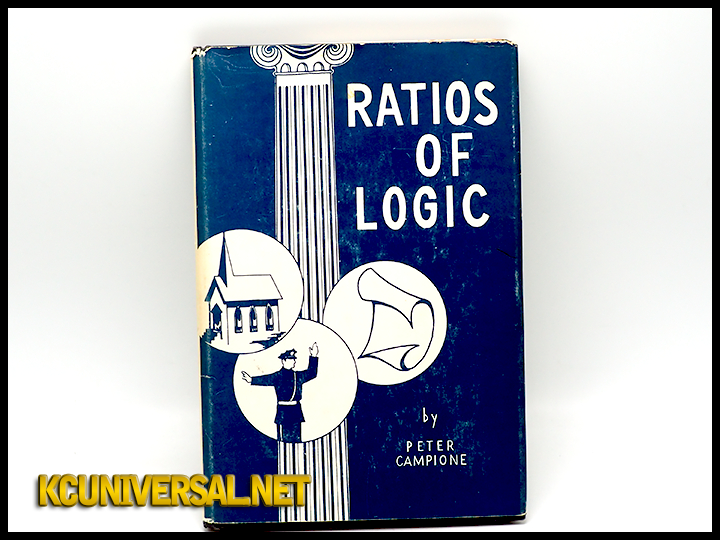




You're looking at a book not one has discussed nor reviewed to this day. That changes with this post: see if you've heard of Ratios of Logic by Peter Campione. This is one of those books that barely saw the light; it's not even listed on Amazon! Title of this book isn't what it seems, however.
(Note: Due to insufficient information online, this author's name shan't be confused with physician Dr. Peter Campione from Buffalo, NY; nor are there any ties with actor Peter Campion and poet Peter Campion. As for the author himself, extra information is needed.)
This book is an account in tackling the area of behavioral psychology: bringing forth importance the commonality of common sense. Author Campione, given his background knowledge in electronics, uses electrical engineering vocabulary as similes in this thesis. On the other hand, while there were some math modeled in Campione's teachings, this is not a book on mathematics—mathematical logic, no less. Aside from that, Campione starts with his introduction of vocabulary terms and their definitions.
The book starts and introduces Campione's variables—\(X \ PLUS\) and \(X \ MINUS\), namely. How he defines both are as follows:
| X PLUS—intellect | X MINUS—instinct |
|---|---|
| Theoretical | Practical |
| E is impact | Closed and open cycle |
| W is power sum of the import and impact | Introvert (Yoga) and Extrovert (Rome) |
| I is import, R is reception |
Adding to the definitions, Campione presents Ohm's Law being
Furthermore,
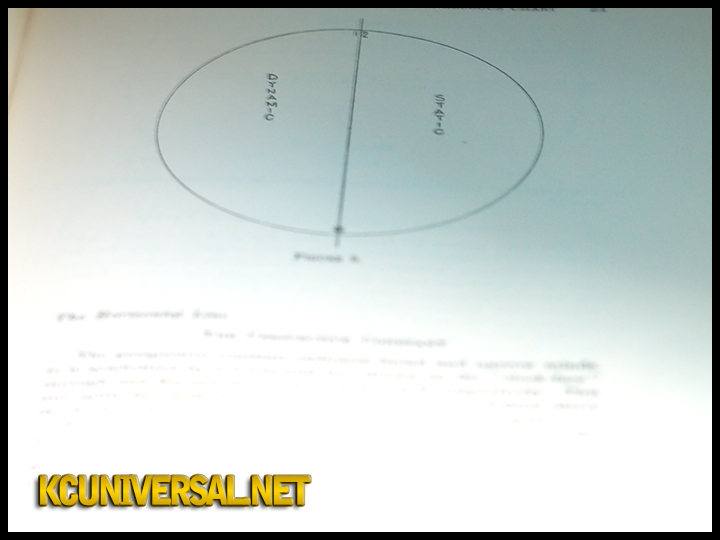
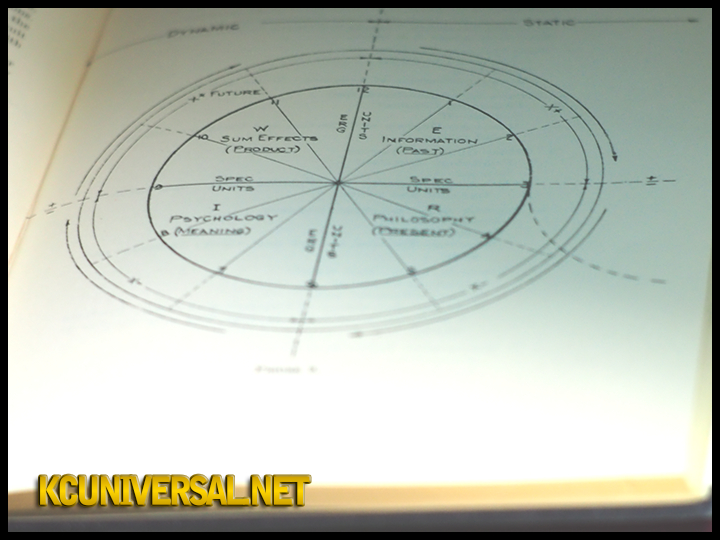
Second chapter displays illustrations building from \(X PLUS\) and \(X MINUS\), conjoined with the open cycle and closed cycle methodologies. Campione uses a clock diagram, divided into quarters, depicting an individual's attainment of knowledge, or information, alongside emotional processes. Due to the amount of information shared, this very chapter is the longest of them all: presented like a reference book. The clock's circular diagram is also presented with its "y-axis" featuring Dynamic and Static areas of the mind; it also includes Positive and Negative values, via "x-axis." Readers will learn of the senses tied with Dynamic and Static halves, concluding with The Analogous Chart.
Chapters four and five utilize terms and diagrams together presenting how they all fit in. As stated earlier, Campione's presentation ties in with electrical engineering, stating such variables, let alone ways of thinking, as "voltage." For readers slowly following the "electrical flow" of information, shows Campione's noting about how emotions and thoughts flourish with respect to his takes. Such literary presentation may take time for the reader to absorb, likely recommending re-reading more than once, though it gets wordy at times.
"...any emotion can be either subjective, objective or neutral. The stronger the emotion, the more is the tendency to become inductive or deep in feeling. The weaker the emotion, the more is the tendency to become objective or shallow in feeling. The more in-phase the emotion, the more likely it is to become neutral.
...
There is a certain peculiarity that makes people start off on impulse to integrate. When they see their short intellectual reach, they attempt to make up for it by assuming leadership of affairs. This is accomplished by stirring the emotions of innocent participants, which, in turn, blots out objective thoughts. — Campione, Ratios of Logic, p.44
Heading into the last chapters, five, six, seven, and eight, leaves Campione being reflective about the state of society. In other words, he presents his thoughts in conjunction with what he's presented about current culture today; and by "current culture," we mean in 1957—the year this book was released. In spite of it, some of his views can be considered—quoted—today. His criticisms weren't vulgar per se, but he feels plenty of things are at stake, were common sense not remain in place moving forward. This begs the question: how will we make common sense more common?
"Western civilization is founded upon separate but loosely integrated pillars of society, and permits their individual growth in theory and practice. Some ancient nationalities have all the pillars of their society bound by religion. This does not contribute to hypothetical organization, which encourages natural development. The tight nature of the binding does not allow the participants the luxury of a broad pespective. Only when the binding is loose enough to separate Church from State and furthers autonomy for the lesser pillars does the citizenry achieve the theoretical privilege of developing to maturity the various facets of the individuality.
...
In the writer's opinion concerning his personal and business life, there are only two kinds of people. Those who inspire his better instincts, and those who prey upon his shortcomings. The former energizes the better side of his nature, (for which he is grateful and happy), and the latter energizes the bad side of his nature, (which he resents, and this makes him unhappy). The former has more to do with inspiration, and the latter more involved with despair and desperation. — Campione, Ratios of Logic, p.45
Of all the information presented, readers will gradually see this book steering toward the topic of psychology, perhaps cultural criticism—or at least so in his takes of people's behaviors (most of which are still applicable today). To further quote his thesis,
"Only by being oneself can genuine happiness be achieved. To be other than oneself is to vulgarize the finer instincts and to cultivate confusion.
With common sense, one attends to spiritual and material health. Without it, no definite predictions can be made, because whimsy is unaccountable, insofar as general instability, yes.
The more spirited the person, the more spirit to be moderated. No one is in a better position to do the moderating than the person himself or herself. Others can only suggest channels to be explored by the spirit, thus cultivating good instincts.
...
The world needs common sense. But first must come the need to love the concept, and then refinement into that capacitive state called maturity.
It is not easy for some theoretical people to see this. They frown upon anything which detracts from their autocracy. It is the real and genuine people which holy society together, not the pretenders. When the ratio of pretenders in a culture exceeds eunuchs given governmental duties in the Greek remnants of the Roman Empire are a good case to establish a precedent, for their instincts were not a good base upon which to build an intellect. The more fibre of man is like a fluted pillar in a way, in that eatch flute expresses a different sied of man's instinct.
It is the duty of creative people to advance the promotion of sensible things. It is they who are skilled in their field, no matter which pillar their vocation or avocation may occupy, that have the power to inspire better instincts, through example.
Then again there are wonderful theoreticians who acknowledge their short-comings as practical people, but have the capacity to dispense information which inspires their students to roll back the frontiers of ignorance.— Campione, Ratios of Logic, pgs.54-55
One of the statements Campione says in the concluding chapters came from a doctor who said to him:
"When a person's education exceeds his intelligence, he then becomes a snob. " — Campione, Ratios of Logic, p.65
That quoted statement leaves us something to think about, as plenty of schools and colleges everywhere, today, feature students wanting technologies, like AI, out of their classrooms.
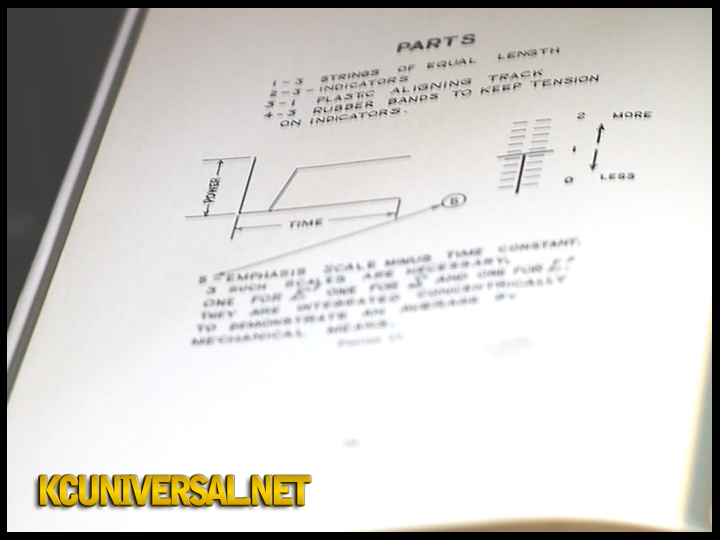
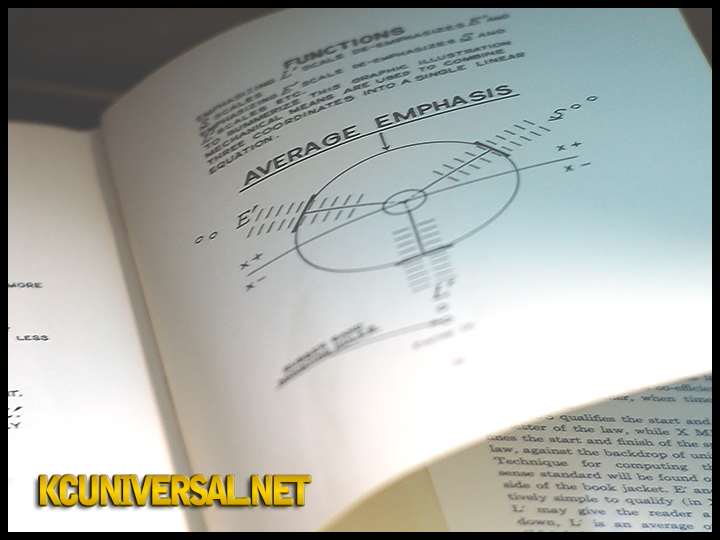
To this day, not one review exists online, currently, for this book. While digital libraries list this book under the genre of mathematics, namely mathematical logic, we find that it falls under "general" or even "essays." Campione lists no citations with his presentations, leaving this something to be read for those who enjoy literary writings from the late fifties. Chapters presenting his diagrams involving human emotions, and thought, best appeal to those in behavioral psychology, sociology, perhaps even law. The mathematics presented in this title are absolutely minimal—with no proofs. While math books are usually presented with definitions, exercises, theorems, and proofs, Campione mostly presented definitions—but not in a "textbook" way. Such presentation may confuse the reader, but best in approaching this with little expectation.
Little is known why this book was never discussed since. Whether its content didn't impress, Campione's thesis renders nothing new, especially by today's standards, or the information shared here, for experts in the field of psychology, leaves little to be applied/desired. Given our eternal love of all things mathematics, logic, philosophy, and computer science, this book's title shouldn't be considered as a vintage text related to math. Having read from start to finish, diagrams pictured above, along with statements quoted, leads us in concluding this is a great title for those specializing in the sciences involving human behavior—as therapists may also benefit something from Campione's teachings. Other than so, this feels more in-line with something related to an essay—computational essay, if anything.
Campione's writing reflects back in a time when authors wrote with rigor. Such thing would make this a treat in owning for your library or reading pleasure. Presentation of the content itself is questionable, not knowing if it's trying to be a textbook or another literary prose critiquing "modern" behavioral thinking involved in our society—America, mainly. Unless you're a researcher wanting to test out in using, and applying, Campione's diagrams into your, or any existing, projects, there's little to be gained from this. However, it's a stark reminder in making common sense more commonplace; and given the narcissistic attitudes today, it may just be our saving grace. As for the book itself, there's mentions about a second edition; but unsure of the book's contents, updates, and presentation. Again, very little information exists currently.
We also err on the possibility that this hidden gem could be what society needed overall. Even if the information, and underlying message, is rather simple, it may add another layer of foundation in keeping our fractured society afloat. There's no word about this book being banned, destroyed, nor anything of that sort, leaving it to be a volume that reviewers can check for themselves. With regard to common sense, as professional PBA bowler Brian Voss once said, "Sometimes in Life, you go back to basics." Could a book like this, that's been hidden and ignored for decades, become the volume that changes society for the better? (For those who read and review nonfiction titles, please see more about this book if possible—see what you think.)
Overall, while readers may find the writing to be wordy, yet rigorous, they will find Campione's definitions and diagrams too deep—almost academic level. In spite of learning to spread nobility in becoming the strong, creative archetype, while reminding ourselves on keeping strongholds for our societal 'pillars,' this book serves as a wake-up call. Those who never heard of this book are welcome to find out for themselves. Being less than 100 pages, there's plenty Campione presents and has to say. Whether his diagrams in this thesis gets used or not, having read and reviewing about it, for being such an uncommon book, remains to be seen. The Internet remains open for anyone in sharing what they think. In contrast, you have have seen one of the images above where our personal, used copy originally belonged to Martha Moody, who had this book signed by Campione himself. If that lady enjoyed the book so much, there's a chance someone out there, especially if they love vintage titles, may comeaway with something memorable out of this.
Support our work by donating!
- Rigorous writing, while sticking to the underlying message.
- Plenty of definitions and diagrams presenting Campione's thesis about emotion and behavior.
- Its information may supplement those in psychological research and sciences.
- Less than 100 pages long.
- Unsure if this book is trying to be a textbook or literary work (lest it's the latter we concluded with after reading it through).
- Little is known about this book online (AI—LLMs—can't find much about it either).
- No extra information about Peter Campione himself nor any other projects he's pursued.
- A book like this being released about urgent need for common sense tells us that things back then weren't any different in comparison to today (excluding factors such as ways of living, trends, technology, and more).
- Second edition has been noted but hasn't been confirmed nor seen.
- Despite the title's use of "logic," this is not a book about mathematics, computer science, nor philosophy.
- Prophetically, albeit ironically, common sense among the populace continues to decline; more so with current technology and lack of purpose in life.
PROFILE |
|
|---|---|
| Title | Ratios of Logic |
| Author(s) | Peter Campione |
| Description | [FRONT FLAP] RATIOS OF LOGIC likens our thought process to that of law making. Some people formulate efficient laws in their daily lives while others make inefficient laws as they go along. The written word is supported by mathematics to ascertain thinking efficiency, or lack of such, in unambiguous terms. What has universal applicability to any field of human endeavor is the common sense formula. The fact that this formula can be applied to every pillar of society to determine the weight of theoretical or practical considerations renders it a valuable tool, thereby displaying its strength and versatility. The book's purpose is to standardize common sense and establish a universal sense of values by qualification. The least it implies is that: There are only two kinds of people in this world of ours, those who add to common sense (the standard), and others who subtract from it. From this, it follows that more faith can be placed in people's capacities than in their incapacities. For good capacities inspire good judgement, whereas incapacities, at best, invite tolerance. Capabilities sustain society, while incapabilities burden it. In sum, it is the faith which we put in each other's abilities that knits society together. Before any law is devised, there is first the need for it. When a law is matured into definition, it is placed in authority for reference, becoming an intellectual instrument, [BACK FLAP] the letter of the law. Any time that law is applied by someone, the person contributes his own spirit (or efforts) to its principle in doing so. The sequence is from the spirit (the need for the law) to the letter (when enacted), and back again to the spirit (for use). To determine the efficiency of any law, a rule of thumb holds true in most cases: Unless a law inspires the application of its principle, it is useless. Western civilization has flourished chiefly because of the clarity of its laws. Our various pillars of society gives us testimony in the form of: Governmental law, religious law, business law, laws in chemistry, physics, etc. Prolonged emphasis upon the letter of the law tends to de-emphasize the spirit of the law detracts from the letter of the law, in commensurate ratio. One is co-efficient and reciprocal to the other, when time is the road to reason. X PLUS qualifies the start and finish of the letter of the law, while X MINUS defines the start and finish of the spirit of the law, against the backdrop of universal man. Technique for computing the commen sense standard will be found on the reverse side of the book jacket. E' and S were relatively simple to qualify (in X PLUS), but L' may give the reader a tussle. Boiled down, L' is an average of the constants (k's) being emphasized in X MINUS. |
| Dedication | -- |
| ISBN | -- |
| Book Dimensions | Width: 6.31″ (6 5/16″) |
| Height: 9.31″ (9 5/16″) | |
| Depth: 0.56″ (9/16;″) | |
| Page Count | 84 |
| Book Number | -- |
| Contents | Preface, Introduction, I Choosing Words and Symbols, II Component Parts Study of the Analogous Chart, III Transition, IV Grasping the Remaining Spectrum in X Minus, V The Implied Power Ratios of Z, VI The Yardstick of Common Sense, VII The Implications of Quantitative Analysis, VIII Conclusion and Review |
| Author Photograph | -- |
| Published | 1957 |
| Publisher | George S. Ferguson Company |
| Manufactured | United States of America |
| Copyright | Copyright © 1957 by PETER CAMPIONE |
| Book Format | Hardcover |
| Quoted Reviews | -- |
| Best Seller's List | -- |
| Other | Library of Congress Catalog Card Number: 57-13049 MANUFACTURED IN THE UNITED STATES OF AMERICA Press of George S. Ferguson Company Philadelphia 6, Pa. Author's Vital Statistics: Age: 41, single and has hopes. Hobbies: guitar, amateur radio, and golf. Vocations past and present: salesman, waiter, bartender, teacher (aircraft sheet metal) and has managed to stay in electronics the past fourteen years due to its challenging nature. Ten of those have been spent as his own boss, running a television service business which he operates currently. It is with a feeling of conviction that the author dedicates this book. To further the training of men into nobler characters who might pray to learn to love their vocation and avocation, for one completes the other. |

MORE BOOK REVIEWS


Comments
Add Comment
This policy contains information about your privacy. By posting, you are declaring that you understand this policy:
- Your name, rating, website address, town, country, state and comment will be publicly displayed if entered.
- Aside from the data entered into these form fields, other stored data about your comment will include:
- Your IP address (not displayed)
- The time/date of your submission (displayed)
- Your email address will not be shared. It is collected for only two reasons:
- Administrative purposes, should a need to contact you arise.
- To inform you of new comments, should you subscribe to receive notifications.
- A cookie may be set on your computer. This is used to remember your inputs. It will expire by itself.
This policy is subject to change at any time and without notice.
These terms and conditions contain rules about posting comments. By submitting a comment, you are declaring that you agree with these rules:
- Although the administrator will attempt to moderate comments, it is impossible for every comment to have been moderated at any given time.
- You acknowledge that all comments express the views and opinions of the original author and not those of the administrator.
- You agree not to post any material which is knowingly false, obscene, hateful, threatening, harassing or invasive of a person's privacy.
- The administrator has the right to edit, move or remove any comment for any reason and without notice.
Failure to comply with these rules may result in being banned from submitting further comments.
These terms and conditions are subject to change at any time and without notice.







Comments